
News and Press
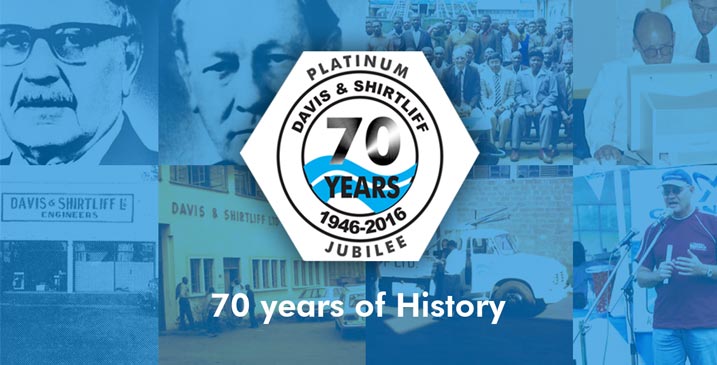
This year is particularly important for Davis & Shirtliff as it marks its 70th anniversary. Over that period, the company has seen tremendous growth marked by its rapid expansion in the region and also a marked increase in its product offering and services.
Out going CEO, Mr. Alec Davis, takes us down memory lane in this video about its past and future. Click {modal https://www.youtube.com/embed/-u4frCMdqWs|width=800|height=500|title=70 years of History}here{/modal} to watch it.
- Details
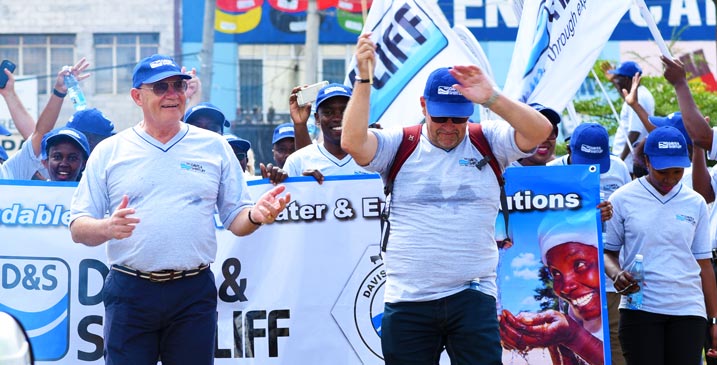
Founders day at Davis and Shirtliff is a long established tradition that commemorates the company’s founding in 1946 by Eddie C. Davis and Dick Shirtliff. This year’s event was particularly special as it also marked the company’s 70th anniversary and so celebrations befitting such a milestone were held.
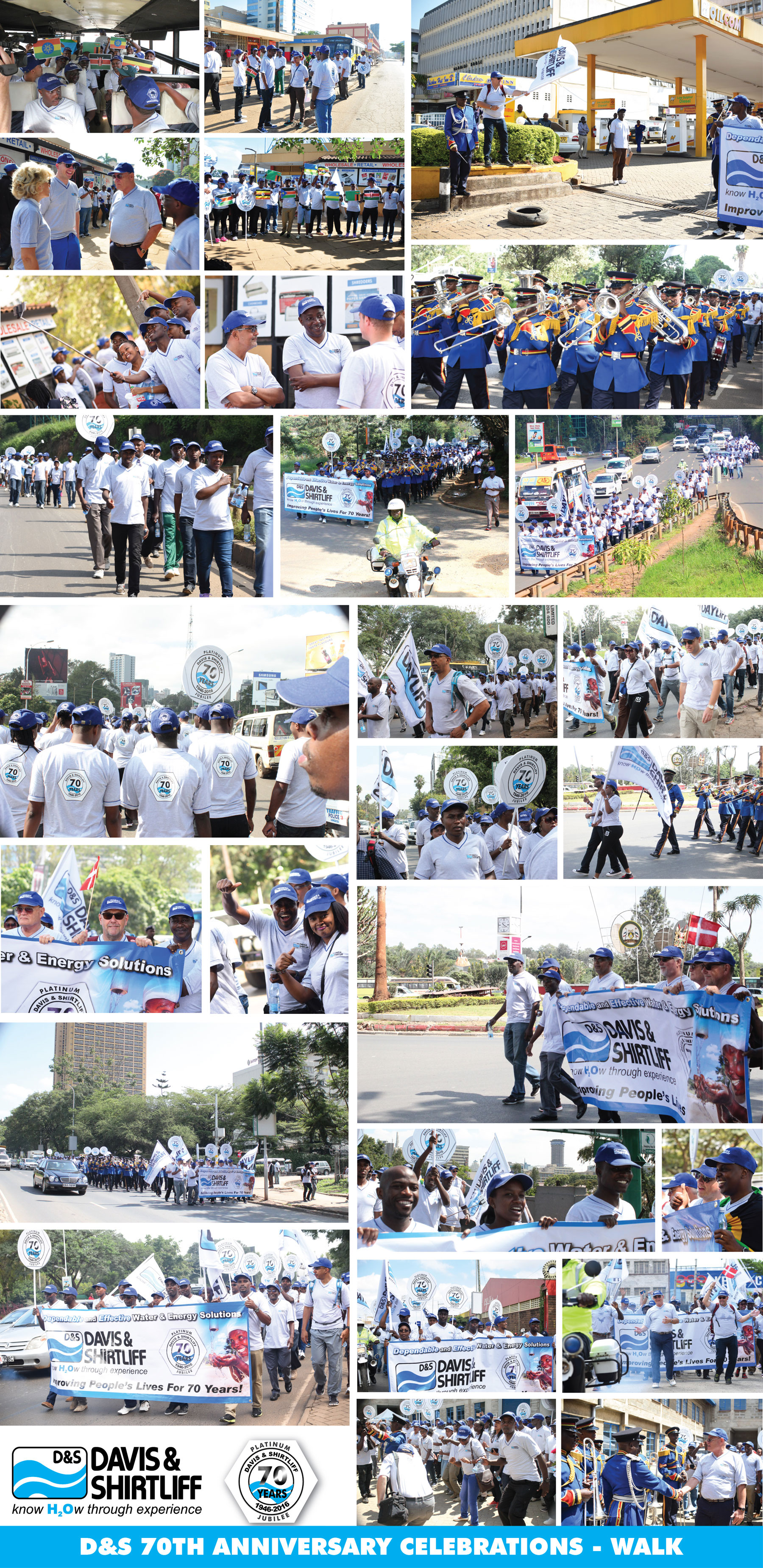
The day started with a walk from the Westlands’ site that marked the company’s original location to the current head office in Nairobi’s Industrial area located along Dundori road. The walk was particularly memorable with the Kenya Police band leading the procession along Waiyaki way, Uhuru highway, Lusaka Road, Dunga road and finally to Dundori road. The walk was attended by more than 150 staff, overseas suppliers and guests such as Poul Mortensen (Guest of honour during the Founders day), Elena Jakobson CEO of Midas, Lee Murray and Ahmad Mushtaq from Davey among others. Representatives from the various subsidiaries such as Zambia (Jonathan Mainga), Tanzania (Benjamin Munyao), South Sudan (George Kinyanjui) and Rwanda (Joseph Wanene). Kindly visit the company’s social media accounts (Facebook & Twitter) for more pictures of the walk.
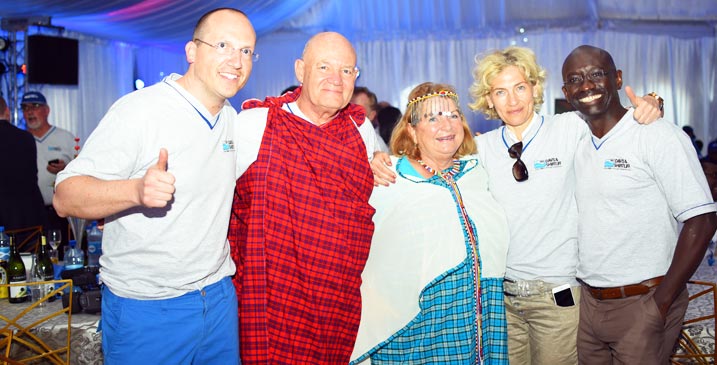
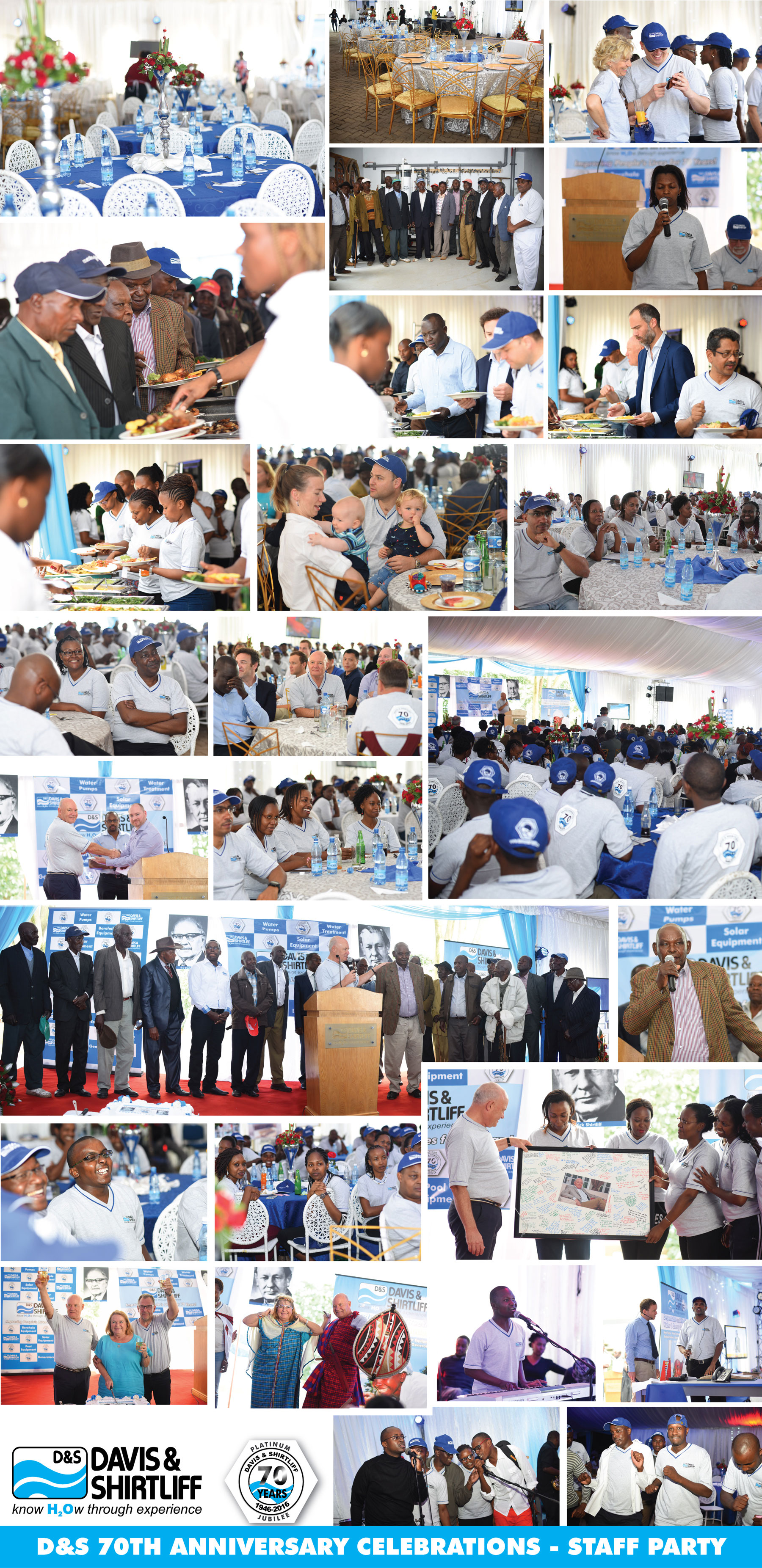
After the walk came the main event of the day and, in keeping with tradition, everyone was in attendance for the sumptuous lunch. After lunch, the CEO Mr. Alec Davis took to the stage to give his tradition address. This year marked his 40th anniversary at the company and also the year of his transition from CEO to Chairman. His tenure at the helm of D&S has seen the company rise from humble origins to become the industry leader it is today. As he now moves to become the Chairman of the group, the position of CEO will be taken up by David Gatende formerly the Deputy CEO who has himself been with the company for 30 years. The outgoing CEO was showered with numerous gifts for his efforts by staff, branches, departments and suppliers alike and may stakeholders took to the state to wish him well. The highlight of the evening was when he and his wife, Mrs. Christine Davis were instituted as Maasai elders. In African culture, being an elder is the highest level of acknowledgement that a community can bestow on one of their own. His leadership, courage, insight and wisdom have been tremendous.
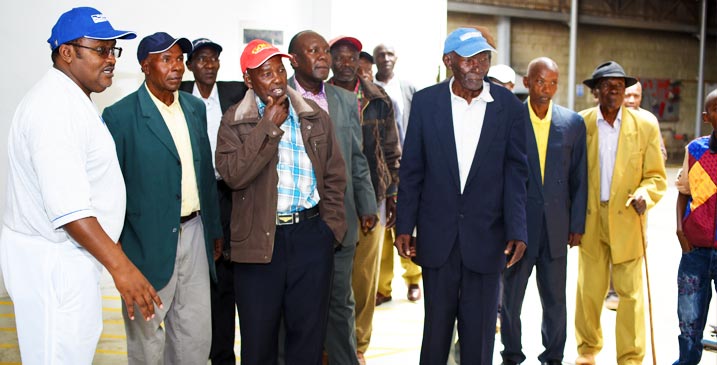
An important group of invited guests to the event were former longstanding staff, a good proportion of whom were octogenarians and septuagenarians. They took trouble to note the new strides the company has made since they retired. It was also worth noting the bond that they had with each other, most of them having worked together for over 25 years. Most have their names on Davis & Shirtliff’s famous 25 years’ service board set aside for employees who have worked for the company for more than a quarter of a century. Davis & Shirtliff has kept close contact with them over the years and certainly looks forward to many more years with them. As they toured the premises, they reminisced of how they used to work and the modern improvements that have taken place since then. They collectively had over 750 years of service and were represented by. Mr. Kimari Gachanja, who joined the company in 1948 as a 17 year old and retired in 1996 after 48 years of service. During the celebration, he gave a particularly moving speech on the value of working hard, being honest and working as a team that resulted in a lengthy standing ovation from the crowd. He was also particularly thankful to the CEO Mr. Alec Davis for his stewardship of the company. Click here to watch his moving speech.
There was also a skit by staff with a cast drawn from various departments in the company which was certainly a comedic success. The skit sought to highlight the past, present and future of Davis & Shirtliff. Participants included Edward Davis, Philip Holi, Henry Davis, Maina Mbatia, Ken Chomba, Irene Karanja, Alfred Bedia, Steve Mwega, Richard Thiru, Annette Wairoma, Gabin Omanga, Joab Mak’Ongul, Fred Andago, Timothy Musembi, Enock Ongondo, Moses Kitheka, Gilbert Barasa, Joel Ndungu and Naomi Mburu. Among these there were certainly some Oscar winning performances.
Last but certainly not least, Brenda Muhati was awarded the Grundfos Friendship and Teamwork award 2016. The winner is selected by staff on the basis of their wider contribution in the workplace and for their thoughtfulness and general concern for colleagues. The award was presented by former Grundfos executive Poul Mortensen, who was Guest of Honor at the event. The runners up were Moses Kitheka, John Mugeke and Maureen Omamo. Service awards were also awarded to employees who have served at Davis & Shirtliff for over a decade. The recipients were Asenath Kiprono, Martin Muraya, Charles Kebaso, Evelyne Wainaina, Michael Musyoka, Jared Asiago, Anthony Karunguru, Joseph Mutuma and Moses Munguti. Special award for 25 years of service was presented to Daniel Kamau. Popularly known as DK, he has risen through the ranks to become a manager having joined the company as a technician. With that recognition, he joins the elite club of people who have their names on the 25 years’ service board.
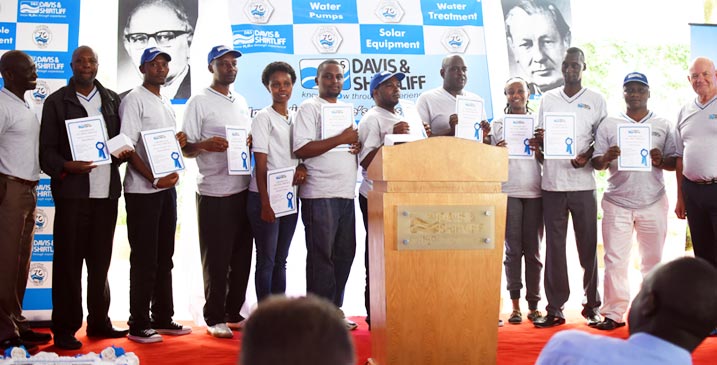
The day served to mark the exciting journey so far and the company certainly looks forward to many more years ahead as it continues improving people’s lives.


- Details
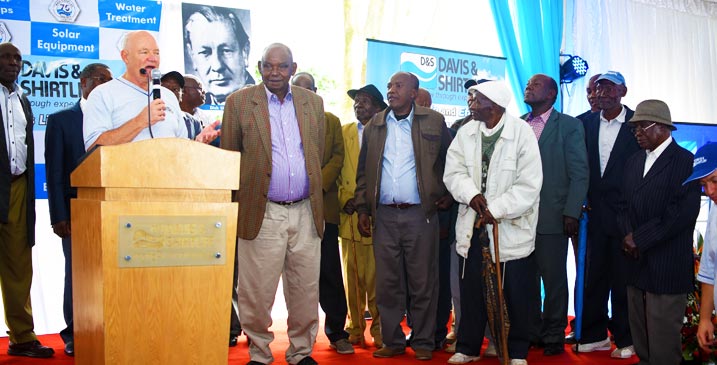
The Founders day is a long established tradition at Davis & Shirtliff and this year’s event was and especially auspicious occasion as it also marked the company’s 70th anniversary which was made extra special by the attendance of former staff who had worked for the company from as early as 1948!
Their names might be familiar to current staff as most of them can be found on the 25 years’ service board at the Davis & Shirtliff head office reception.
During his address, the outgoing CEO, Alec Davis introduced them individually, recalling each one of them by name, as he expressed his sincere gratitude for their years of service to Davis & Shirtliff.
As their spokesman and on the occasion of the company’s 70th anniversary, Mr. Kimari Gachanja (whom they fondly refer to as mwalimu) gave a moving speech in front of all the assembled guests. He told of the hardship of days gone by and urged the entire staff to continue working hard, in a honest manner and in the spirit of teamwork. He himself had joined the company in 1948 as a 17 year old and is now an amazingly spry and healthy 86 year old. The former staff present on the day had collectively more than 750 years of service together, which is no mean achievement by any standards. Here are a couple of pictures taken of them during the day.


- Details
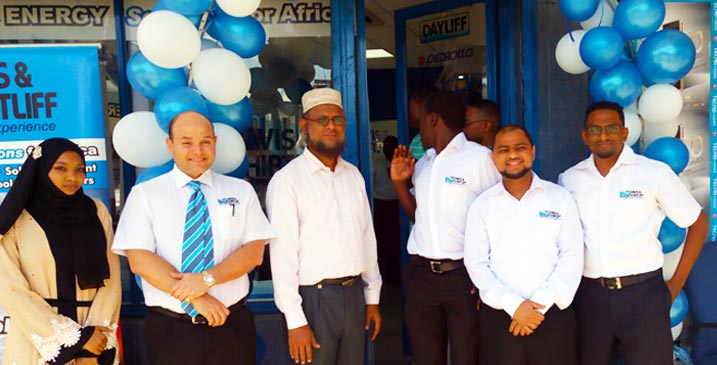
Davis & Shirtliff Coast, having in February celebrated the opening of their new state of the art Head Office, has taken another important initiative and opened a new branch in the heart of the business district of Mombasa Island, on the roundabout junction of Jomo Kenyatta Avenue and Digo Road.
The smartly branded branch, known as Davis & Shirtliff Mombasa Downtown, enjoys huge footfall and will improve service and delivery to the many active Davis & Shirtliff Approved Stockists in the area. Unusually for a shop on this heaving trading street, this latest Davis & Shirtliff branch is fully air conditioned and extends the usual Davis & Shirtliff ambiance to its staff and customers. The new branch was set up in record time by Davis & Shirtliff Coast GM Mohamed Farook and branch manager Adam Abdallah and has already welcomed its first customers.
In attendance during the official opening was Business development manager Edward Davis. This latest addition bring to 7 the total number of branches in the Coast region. See more photos below of the branch.


- Details

On 12th and 13th May, to mark our 70th anniversary, there was a special supplement in the Daily Nation and The Standard newspaper about Davis & Shirtliff. It had a story about our past, present and future as well as congratulatory messages from our suppliers such as Grundfos, Pedrollo, Davey, DAB Pumps, Lorentz, Liquid Telecom, Sparr drilling, Alliance Media, Kohler Engines, Old Mutual among others. You can click here to download or read it.
- Details
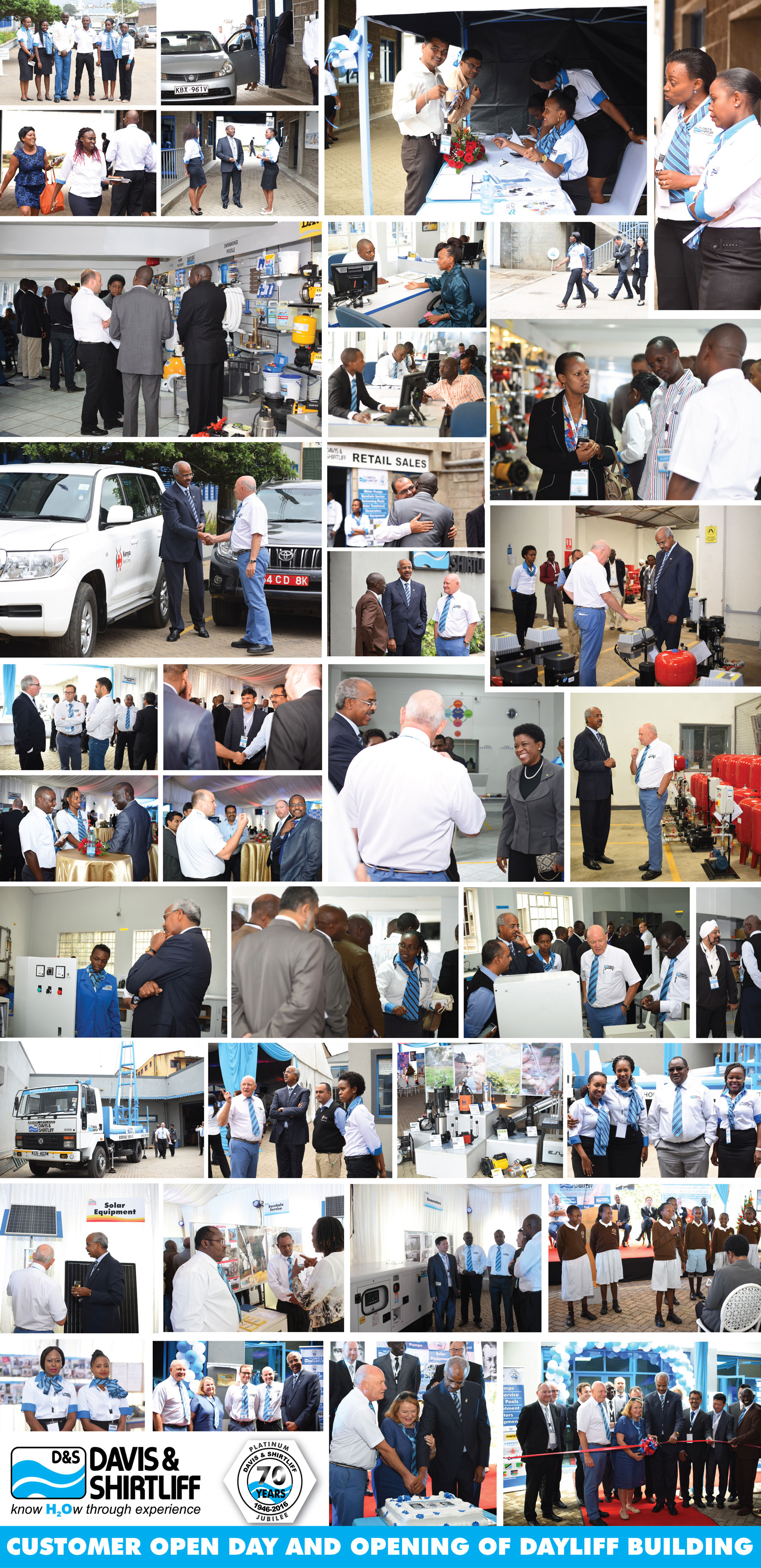
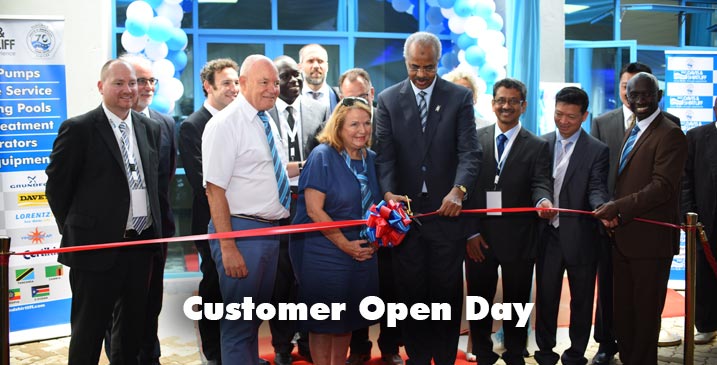
This year marks a major milestone for the company as we celebrate our 70th anniversary. We had a lot of activities lined up to celebrate this major milestone. One of the activities was a Customer Open day that took place on Friday, 13th May.
We had invited our major suppliers, both from overseas and local, as well as our major customers from the various departments and branches in Kenya to showcase the various products and technologies that we have on offer. Of particular interest was the iDayliff monitoring system that drew a lot of interest from the guests.
It was also a chance to officially open our new building named the Dayliff building. The building has a floor space of 1500m2 and will host our HR and training center, logistics and supply teams and the expanded canteen that has a capacity of 180 people. The building was officially opened by the guest of honor, Dr. Abbas Gullet, the secretary general of the Kenya Red Cross Society. The building features the runs the latest in green technology as well as other state of the art features. It has solar PV electricity and solar heated water. It also has a wireless telephony system that will see employees use soft phone instead of desk phones saving the company a huge expense.
The open day was attended by over 200 guests. Our overseas suppliers represented included Grundfos (represented by Lee Carlin and David Githendu), Pedrollo, (represented by Dr. Moustapha Tounkara and Andrea Abagnato), Dab Pumps (represented by Carlo Fuccela), Midas (represented by Elena Jakobson), Yanan (represented by Bella Zheng and Owen Lu), Lorentz (represented by Kai Reinecke) and Davey pumps (represented by Murray Jones & Ahmad Mushtak). In attendance also was the high commissioner of Zambia to Kenya HE Brenda Muntemba who commended the work done by Davis & Shirtliff in both Kenya and Zambia.
The occasion also was used to hand over the various projects that the company undertook under its CSR initiative to the various beneficiaries. The beneficiaries were Life Spring Christian academy from Kibera, Karen technical training school for the deaf and to a community in Namanga supported by Wellaware nonprofit making organization. The projects would go a long way in supporting the community and improving their lives in-line with our slogan. Check below for the photo gallery. You can also check out our social media account to see how the event unfolded on Twitter and Facebook


- Details

Dundori Road, Industrial Area
Nairobi
P.O Box P.O Box 41762 - 00100
Kenya